A bag of baby spinach can be easy to open for one meal and forget behind the milk. Giving the remaining leaves a specific job makes the next dinner decision simpler. Start with what is already in your kitchen, then choose a cooked dish that welcomes a handful of greens.
These are flexible cooking ideas. Adjust ingredients and quantities for your household, allergies and preferences, and follow the directions for the particular products you use.
Check the bag before choosing a meal
Read the use-by date, refrigeration advice and any instructions about washing or using the leaves after opening. Follow whichever instruction sets the earlier limit. Discard leaves that are slimy, mouldy or otherwise spoiled, and discard produce if its storage history makes its safety uncertain. Cooking should never be used to rescue spoiled food.
The NSW Food Authority’s fresh-produce guidance advises against eating food past its use-by date and explains safe preparation, including handwashing and preventing contact with raw meat. It also says produce labelled pre-washed can be used without further washing. Follow the directions on your bag.
Choose the meal first
Look for a dish you already know how to make. Spinach can join tomato pasta, a bean soup, a curry or scrambled eggs. Pick the option for which you have the other ingredients, rather than adding several purchases just to finish one bag.
Think about the role of the spinach. A small amount can add green leaves to a sauce. A larger amount may work better as a separate cooked component. Baby leaves and mature spinach also behave differently, so use a recipe appropriate to what you have.
Stir a handful into tomato pasta
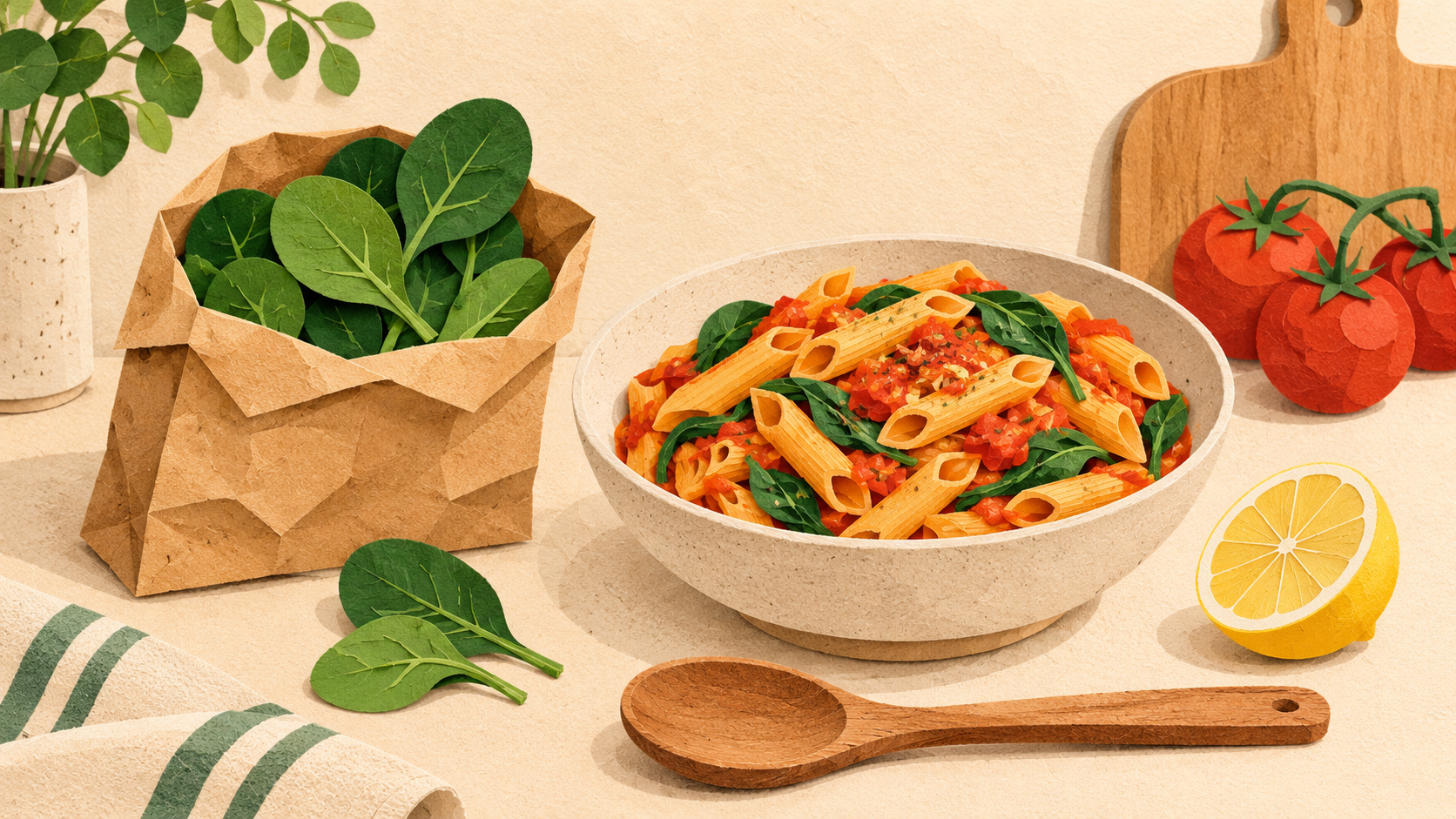
Prepare your usual tomato sauce and cook the pasta according to its packet. While the sauce is still cooking, add prepared spinach in manageable handfuls and stir as the leaves soften. Give each addition room to settle before adding more.
Check the consistency before combining everything. If the sauce has become watery, allow excess liquid to cook off as appropriate for your recipe. If it is too thick, add a little liquid at a time. Finish with an ingredient you enjoy, such as lemon zest, pepper or grated cheese, accounting for allergies and dietary needs.
Add greens to a familiar soup or curry
A soup or curry is another way to use a modest amount. Make the main dish as usual, then add prepared spinach while it continues cooking. Stir it through so the leaves are distributed instead of sitting in one clump.
Use the rest of the dish to decide how much spinach to add. If you want a chunky bean soup, keep enough broth for that texture. If a curry already contains plenty of vegetables, a smaller handful may be all you want. Taste before adding more seasoning.
Cook it separately for eggs or toast
For a meal where extra liquid would be awkward, cook the prepared spinach separately first. Use your usual pan method, stir the leaves as they soften and let excess moisture evaporate. Then add the cooked greens to your chosen egg dish or serve them alongside toast.
Follow a reliable recipe for the eggs and cook them appropriately for the people eating them. You can also pair the spinach with beans, mushrooms or another familiar topping. Choose a combination that makes sense as a whole meal for you.
Give any remaining leaves a visible place
Keep spinach refrigerated as directed on its packaging. NSW Love Food Hate Waste suggests storing baby spinach in an airtight container with paper towel to absorb moisture. This storage tip does not extend a use-by date or replace the product’s instructions.
Make a quick note of the meal you intend to cook and check the leaves again before using them. If you repeatedly leave part of a bag, consider whether a smaller pack or a planned second meal would fit your household better.
A simple plan for the next bag
- Check dates, storage instructions and condition.
- Choose one familiar meal that can use the remaining leaves.
- Match the amount to the texture you want.
- Manage extra moisture before combining ingredients.
- Keep any remaining leaves refrigerated and use them within the stated limits.
For help assigning ingredients to different meals, see our guide to planning flexible dinners for the week. Giving spinach a second meal from the start can be easier than deciding what to do with it at the last minute.