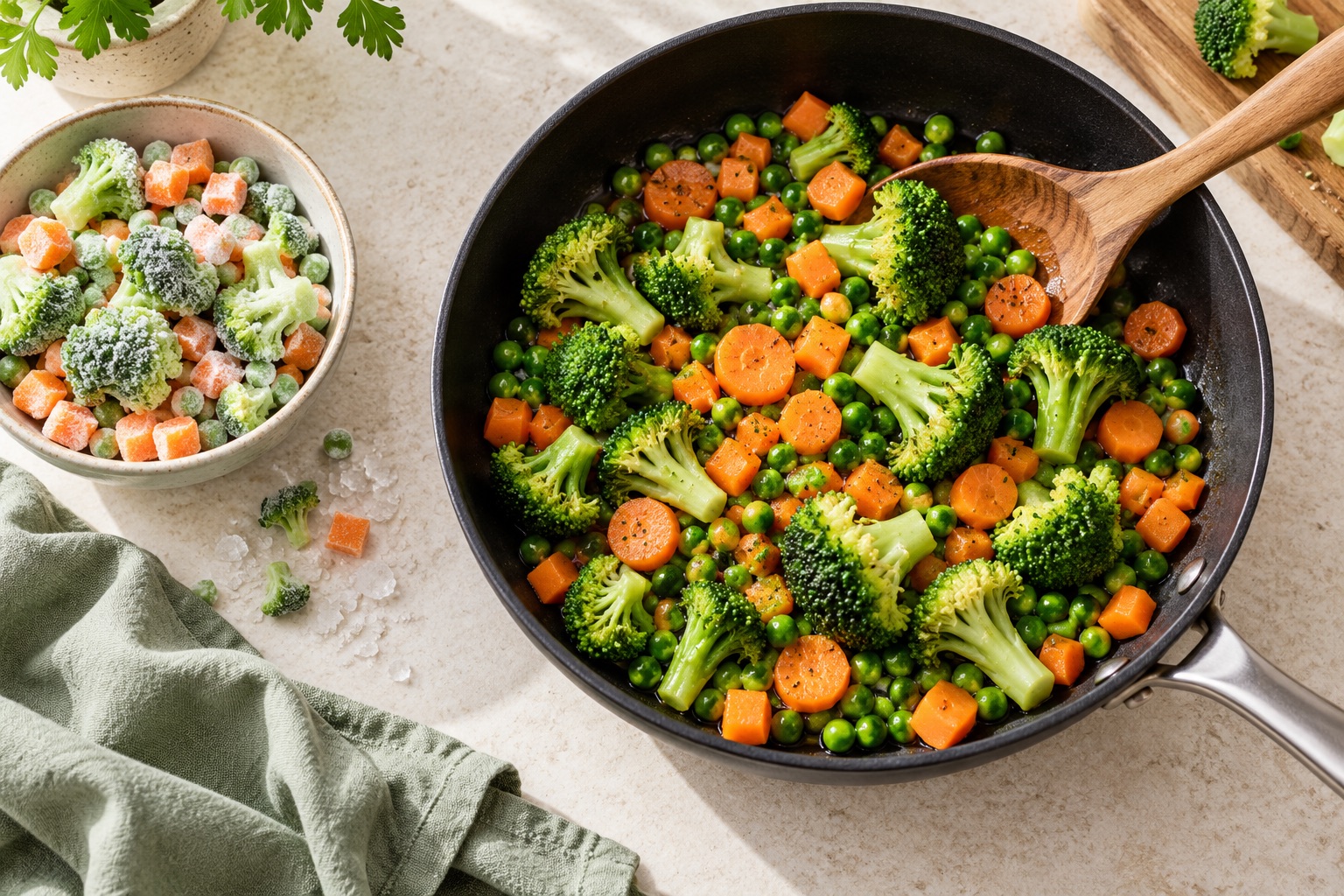
A bag of frozen vegetables can be the difference between cooking dinner and deciding there is nothing to cook. The useful part is having vegetables available when the crisper is empty, the shopping is overdue or chopping feels like one job too many.
They deserve a place in a normal kitchen. Australia’s Eat for Health guidance includes frozen vegetables among the suitable choices alongside fresh, canned and dried options. Choose a variety you enjoy and will use. Read the vegetable food-group guidance.
Buy for the dinners you actually make
The largest mixed bag is not automatically the most useful. Think about two meals you cook regularly, then choose vegetables that fit them. Small peas suit a quick pasta. Broccoli florets can sit beside baked fish or tofu. Chopped spinach is handy when you want greens folded through a sauce rather than a separate side dish.
Start with one plain mixed bag and one favourite single vegetable. This keeps the choice simple and gives you a chance to discover what your household likes. A freezer full of unfamiliar ingredients still requires decisions at dinner time.
Compare the ingredient lists, especially on seasoned products. Plain vegetables let you choose the seasoning yourself. A sauce-coated mix may suit a particular meal, but it is worth knowing what you are buying rather than assuming every bag is interchangeable.
Let the packet decide the cooking method
Frozen vegetables are not automatically ready to eat. Check the storage and cooking directions on the particular product, including whether it should be cooked from frozen. Follow those instructions rather than treating a handful of frozen peas as a raw salad ingredient.
For a mixed meal, cook the vegetables as directed and then combine them with the other components. That is a useful default when the packet timing does not match your sauce or pasta. It also makes the result easier to judge the first time you use a new product.
Pour out the amount you need and return the remaining bag to the freezer promptly. Keep the label available so you can check the directions next time. A clip on the opened bag makes this much less fiddly.
Give the vegetables a clear job
Some dinners need a substantial vegetable side. Others need colour, texture or something that helps stretch a sauce across more portions. Decide which job you want before adding everything in the freezer.
- A separate side: cook broccoli according to its packet, drain if needed and finish with lemon zest and a little olive oil.
- Part of a bowl: pair a cooked vegetable mix with rice, tofu or another protein you enjoy, then add a modest amount of your favourite dressing.
- Through a sauce: stir cooked, well-drained spinach into a tomato sauce, then taste before adding more liquid.
These are flexible combinations rather than precise recipes. Adjust the quantities to the number of people eating and the other food on the plate. Our guide to building a dinner plate offers more ways to think about the whole meal.
Manage water before adding flavour
If a dish tastes diluted, extra seasoning may not solve it. Check whether water from the vegetables has made the sauce thinner than you wanted. Drain cooked vegetables when the method calls for it, and add them gradually so you can see how the dish changes.
Avoid tipping a very large quantity into a small pan and expecting the same result as a small batch. Follow the product’s directions, use suitable cookware and work in batches if needed. If a soft texture suits the dish, embrace it: chopped greens can belong in a sauce without needing to resemble a crisp side salad.
Keep two finishing combinations ready
You do not need a different sauce for every vegetable. Choose a couple of finishes from ingredients already in your kitchen. Lemon, black pepper and olive oil are a simple starting point. For a different meal, try garlic, a little reduced-salt soy sauce and sesame seeds, taking account of allergies.
Add a small amount, taste and adjust. If the main dish already has a strongly flavoured sauce, the vegetables may need very little. A spoonful of chopped herbs or a squeeze of lemon can be enough.
Make one freezer fallback meal
Write down a combination you can make without another shopping trip: a grain or pasta, a protein food, frozen vegetables and a flavouring. Keep it somewhere visible. Eat for Health also suggests using frozen vegetables to make quick meals and add to leftovers. See its quick-meal ideas.
After dinner, ask one practical question: would you willingly make that again on a busy night? Keep the combination if the answer is yes. Change the vegetable or finish if the answer is no. The best freezer staple is the one that reliably becomes dinner.