A can of white beans and a tin of tomatoes can become a useful pan meal without a long shopping list. The difference between a watery mixture and something you want to spoon onto toast is often the order you add things, plus a small texture adjustment at the end.
This is a flexible cooking framework for plain canned cannellini or butter beans. It uses softened vegetables, a tomato base and a few mashed beans to bring the sauce together. Adapt the flavour to what you already have, rather than opening several extra jars.
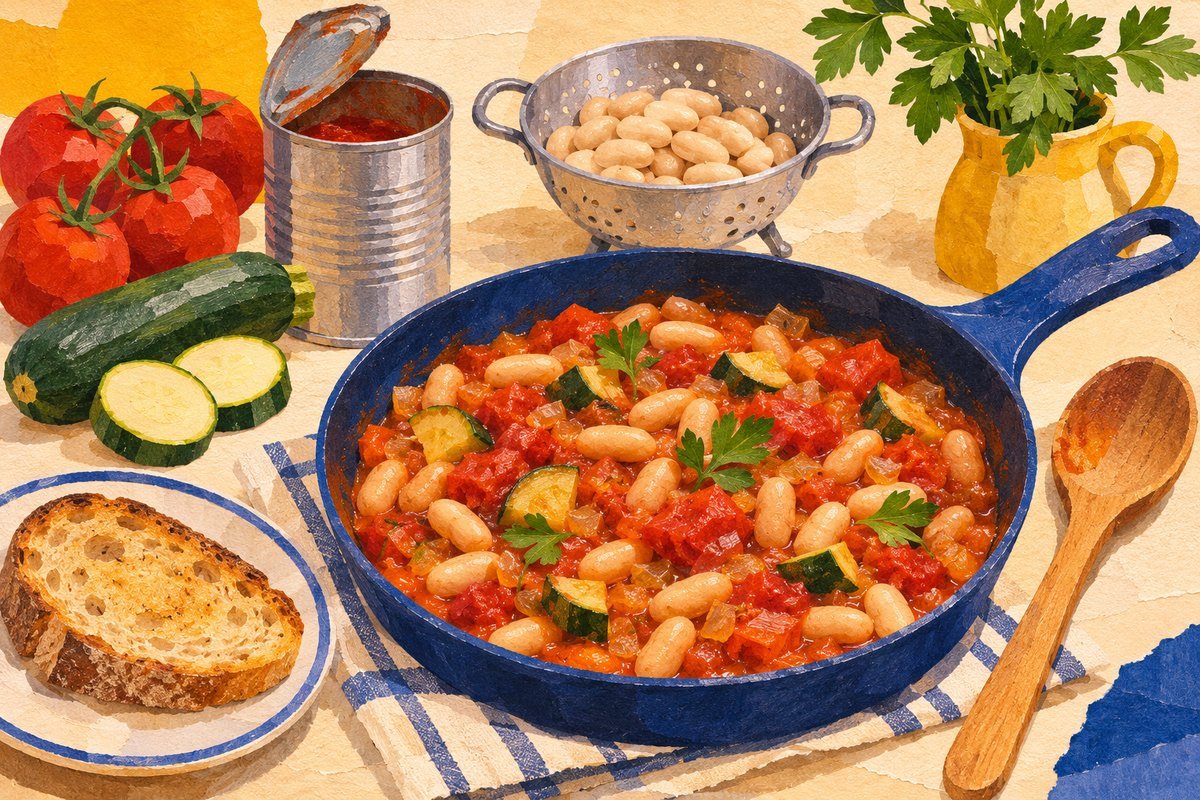
Gather one small pan’s worth
Start with the quantities below, then choose bread or another accompaniment to suit your appetite and the number of people eating. Can sizes and drained weights vary, so treat the mixture as a starting point rather than a fixed nutrition calculation.
- One roughly 400 g can of plain cannellini or butter beans, drained and rinsed.
- One roughly 400 g can of chopped tomatoes, including the juice.
- One small onion, finely chopped, and one small zucchini, diced.
- One tablespoon of olive oil.
- One crushed garlic clove, or a little garlic powder if that is what you have.
- Half a teaspoon of dried oregano or smoked paprika; pepper and a little lemon juice or vinegar to finish, if wanted.
- Toast, bread or another familiar accompaniment.
When shopping, the Australian Government’s Eat for Health guidance recommends canned legumes and tomatoes without added salt. Use the labels to choose an option that suits you; the method does not depend on a particular brand.
Check the cans before you start
Inspect the packaging and follow any storage and preparation directions. Food Standards Australia New Zealand advises against using cans with swelling, leaks, rust or damage, including damaged seams. Do not taste food from a suspect can to decide whether it is safe.
Wash your hands, use clean utensils and wipe or wash the can tops before opening. This method is for commercially canned beans; do not substitute dried beans directly into the pan. They need their own preparation and cooking instructions.
Build the sauce before adding the beans
- Soften the vegetables. Warm the oil in a saucepan or frying pan over medium heat. Add the onion and zucchini. Stir regularly until the onion softens and the zucchini is becoming tender. Reduce the heat if the edges brown before the centre softens.
- Add the flavouring. Stir in the garlic and your chosen herb or spice. Keep stirring briefly so the garlic does not scorch.
- Make a tomato base. Add the tomatoes and their juice. Bring to a gentle simmer, then cook uncovered, stirring occasionally, until the sauce looks less watery. Keep the heat gentle enough to avoid vigorous splashing.
- Fold in the beans. Add the drained, rinsed beans and stir gently. Continue simmering until the beans are hot throughout and the vegetables are tender. Follow any additional heating directions on the can.
- Adjust and serve. Press a spoonful of beans against the side of the pan and stir them back into the sauce. Taste, then decide whether you want pepper, herbs or a small splash of lemon juice or vinegar. Spoon into a bowl or onto toast.
Use texture as your guide
If the mixture is too thin, leave it uncovered a little longer and stir to prevent sticking. Mash a few more beans if you want a thicker, more spoonable sauce. If it becomes too thick, add water a tablespoon at a time until it moves easily around the pan.
Stir carefully if you want to keep most beans whole. Butter beans can make a chunkier bowl; smaller cannellini beans give a different balance of beans to sauce. You do not need to chase an exact consistency on the first attempt.
Make one change next time
Try diced carrot in place of zucchini, allowing it to soften before adding tomatoes. Or change oregano to smoked paprika for a different flavour. Keep the basic sequence so you can tell which change you prefer. For broader planning, our guide to flexible dinners for the week helps give ingredients a second use.
Put the extra portion away promptly
Transfer unused canned ingredients into a clean covered container and refrigerate, following their after-opening instructions. For the cooked meal, the NSW Food Authority advises dividing leftovers into small portions and refrigerating or freezing within two hours. Eat refrigerated leftovers within three days and reheat until steaming hot throughout.
Keep your fridge below 5°C, as set out in its home food-safety guidance. A label may give a shorter storage period; follow it. Do not leave the pan on the bench waiting for tomorrow’s lunch.
Suggested cooking framework, not a hands-on tested recipe. Sources checked on 28 November 2026.