A weekly dinner plan can look excellent on Sunday and feel impossible by Tuesday. A late finish, a changed appetite or an ingredient you forgot can make a rigid menu more work than it is worth.
Try planning a few adaptable dinners around the week you actually have. You still decide what to buy, but leave room to swap the order and simplify a meal. The method below is a practical planning exercise, with an example you can change to suit your household.
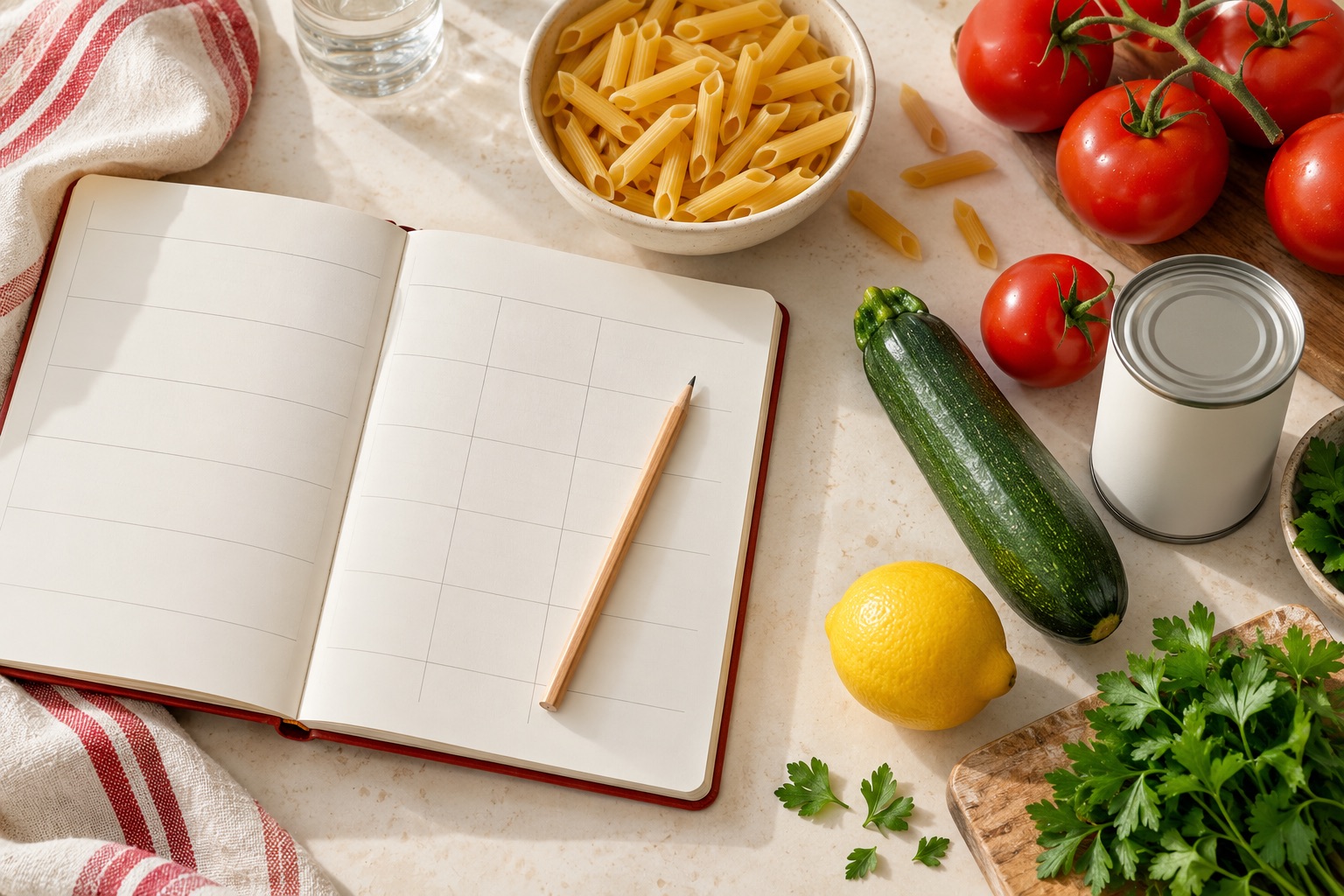
Start with the evenings, not the recipes
Look at the next few days before opening a recipe website. Which evenings leave time to cook? Which involve sport, travel, late work or different people eating at different times? Mark the crowded evenings first.
Give those nights a familiar meal with a short ingredient list. Save the recipe you have never made for an evening when you have room to read the instructions and adjust. A realistic plan might contain one new dish and several old favourites.
You do not need to map out every meal immediately. NSW’s Love Food Hate Waste guidance says you can begin with three dinners rather than planning an entire week. That is a manageable starting point if a full menu feels unwieldy. Read its meal-planning advice.
Check what you already have
Look in the fridge, freezer and cupboard. Write down the ingredients you would like to use, then choose meals that give them a specific place. Half a bag of carrots is easier to remember when the plan says where they belong.
Check dates and storage instructions rather than assuming everything you find is usable. Keep this as an ingredient check, not an invitation to reorganise the entire kitchen. The aim is to make the next shopping list accurate.
Separate “already have” from “need to buy” on the same page. If someone else does part of the shopping, agree on one shared list so both of you can see what is missing. An ordinary piece of paper works as well as an app if everyone knows where it lives.
Choose two ingredients that can do more than one job
Look for overlap between meals without making every dinner taste the same. Zucchinis might go into a tomato pasta and a tray of vegetables on another evening. Parsley could finish a bean dish and a simple side salad.
Think in terms of ingredients, rather than relying on cooked leftovers lasting until a particular day. Plan quantities around the recipes, package sizes and number of people eating. Follow the relevant storage and food-safety directions for any food you prepare ahead.
For example, buying a bunch of herbs for a single garnish may be awkward if nothing else on the plan uses them. You could choose a dried herb you already own, buy a smaller amount or give the fresh bunch another role. Let the second use solve a real problem rather than creating an extra recipe.
Write a short menu with a flexible order
Here is an illustrative three-dinner plan. It is not a prescribed diet or a set of tested recipes; choose quantities and cooking methods that suit your needs.
- Tomato and lentil pasta: pasta, canned tomatoes, lentils, zucchini and herbs.
- Vegetable tray dinner: carrots and zucchini, with tofu or another protein food you enjoy, plus a grain or bread.
- Quick bean bowl: beans, a suitable grain base, vegetables and a lemon-and-herb finish.
Put the meal requiring the least effort beside your busiest evening. Leave the other two movable. If your plans change, swap the meals before buying additional ingredients. For more ideas about the parts of a meal, see our guide to building a dinner plate.
Keep one fallback separate from the main plan
A fallback meal should use ingredients you can keep according to their storage instructions and prepare in a familiar way. It is there for an unexpectedly crowded evening, not as another elaborate project.
Write down the complete combination, including what you will use for flavour. “Something from the cupboard” still leaves a decision to make. “Pasta with a tomato-and-bean sauce and cooked frozen vegetables” is a clearer starting point.
If you regularly rely on the freezer, our frozen vegetable guide covers practical ways to use it. Follow packet cooking directions, including for frozen vegetables.
Turn the menu into a shopping list
Read each meal from start to finish and list the missing ingredients. Include basics such as oil or seasonings only if you need them. Australia’s Eat for Health guidance recommends planning meals and snacks and shopping with a list. See its food-shopping tips.
Group the list in a way that helps you shop: produce, cupboard items, chilled foods and frozen foods, for example. Check quantities against the actual recipes instead of buying an extra packet “just in case”. Choose substitutions that fit your preferences, allergies and budget.
Keep the useful parts next week
After a few dinners, note what you would willingly cook again. If a meal was too demanding for a busy night, move it to a different slot. If an ingredient went unused, change the amount you buy or give it a clearer purpose.
Keep a short list of dependable dinners and add to it gradually. A flexible menu does not need constant novelty. It needs a few meals you enjoy, ingredients you can account for and enough room for an ordinary week to change.