Balance practice does not need to begin with a wobble board or a long one-leg challenge. A clear patch of floor and reliable support offer a more practical starting point. The useful question is whether you can move deliberately and return to a comfortable position, rather than how long you can avoid touching something.
This guide explains two beginner movements and a way to organise a short practice. It is general information for adults, not a falls assessment, rehabilitation programme or a promise that a brief routine will prevent a fall.
Where balance fits in your week
The Australian movement recommendations for adults aged 65 and over include activities targeting mobility, balance and coordination on three or more days each week, alongside strength work and other movement. That is a broader weekly pattern, not a requirement to master a particular balancing trick.
Healthdirect explains that balance activities can improve stability and help prevent falls. People at high risk of falling should seek professional guidance. Reading instructions is not the same as having someone check whether a movement suits you.
Set up before you start
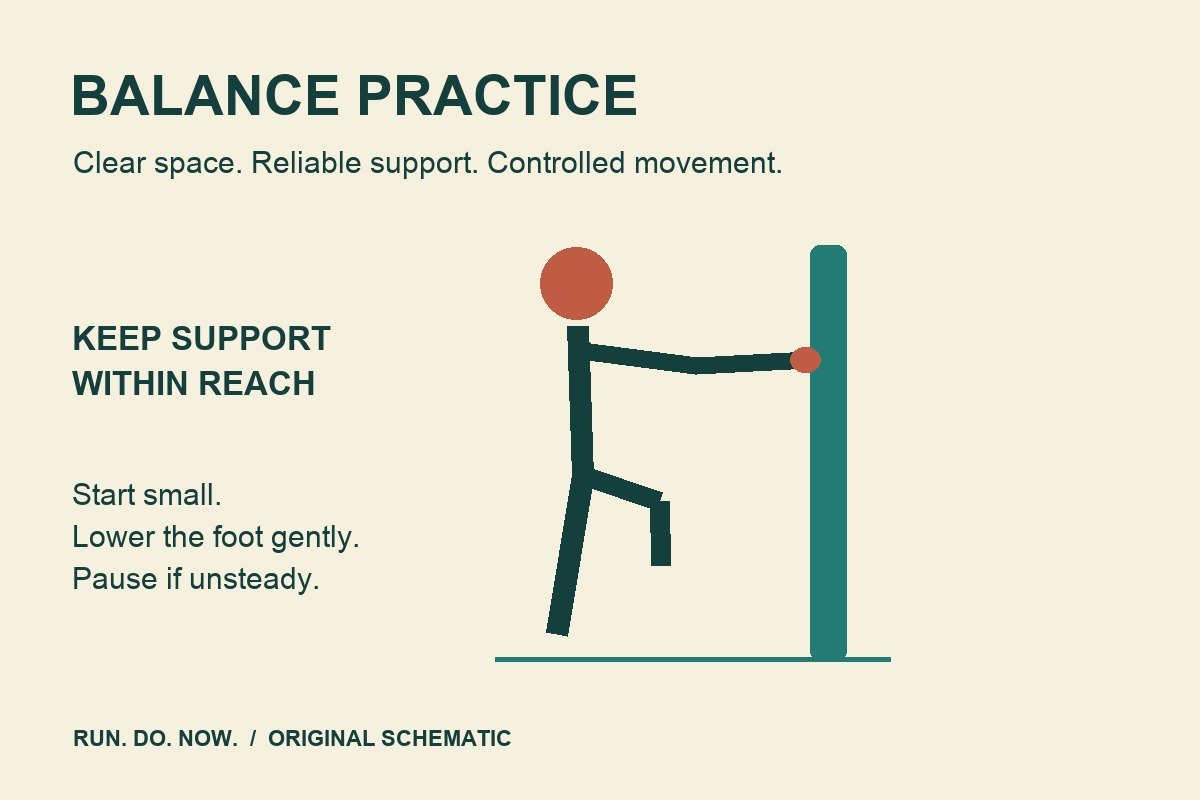
Choose a level, dry, uncluttered space beside a wall or fixed support. Move loose rugs, cables and other obstacles out of the practice area. Keep pets away while you exercise. Use supportive footwear and avoid a slippery surface. Do not use a wheeled chair or furniture that moves when you lean on it.
Think of the space as a small practice station: support within reach, enough room for a few steps and somewhere to pause. Keep your phone available, but put messages and timers aside until you have stopped moving. You do not need to combine balance work with another task.
If you have fallen recently, feel unsteady during everyday activities, have dizziness, or need help standing, ask a GP or physiotherapist about an appropriate starting point. Healthdirect also advises medical review before a new exercise programme if you have a medical condition or have been mostly inactive.
Two movements to understand first
The following movements are adapted from the NHS balance-exercise instructions. Keep support available and stop if the movement feels unsafe.
1. Slow sideways steps
Stand upright with your feet together and knees slightly bent. Step one foot sideways, then bring the other foot alongside it. Move slowly and avoid letting one hip drop. Travel only as far as your clear space and nearby support allow, then work back in the other direction. The NHS describes up to ten steps each way; start with fewer if needed.
2. A supported one-leg lift
Face a wall with fingertips touching it. Lift one foot, keeping your hips level and a slight bend in the standing knee, then lower it gently. The NHS describes holds of five to ten seconds, repeated three times per side. Use a shorter lift or return the foot immediately if you cannot stay controlled. Keep the wall available throughout.
Make the first session a rehearsal
For an illustrative first practice, choose just one movement. Read it before starting, check the space, try a small amount and pause. Ask yourself: Was support easy to reach? Could I place my foot down deliberately? Did the space stay clear? Those observations are more useful than a competitive stopwatch score.
For example, your note could say, “Side steps beside the wall; kept support close; stopped before rushing.” This is a record of the session, not a clinical measure or proof that your fall risk has changed. A physiotherapist can help decide what to change if you are unsure.
Change one thing at a time
Repeat a manageable version before adding more. You might practise on another suitable day or make a small increase in repetitions. Do not simultaneously narrow your stance, remove support and extend the session. Avoid closing your eyes or balancing on cushions as an unsupervised beginner progression.
Stop for dizziness, faintness, pain or unusual breathlessness. Seek urgent help for severe chest pain or severe shortness of breath. Keep balance work as one part of your activity mix: our guides to judging walking intensity and starting strength training at home address different parts of that mix.
Sources checked 29 November 2026: Australian Government movement recommendations, Healthdirect and NHS guidance linked above. The practice example is an editorial illustration, not a tested programme or personalised prescription.