A small container of cooked rice can be the start of dinner if it has been cooled and stored safely. Give it a quick storage check before choosing the vegetables or heating a pan. Once that is sorted, a few familiar ingredients can turn it into a useful meal.
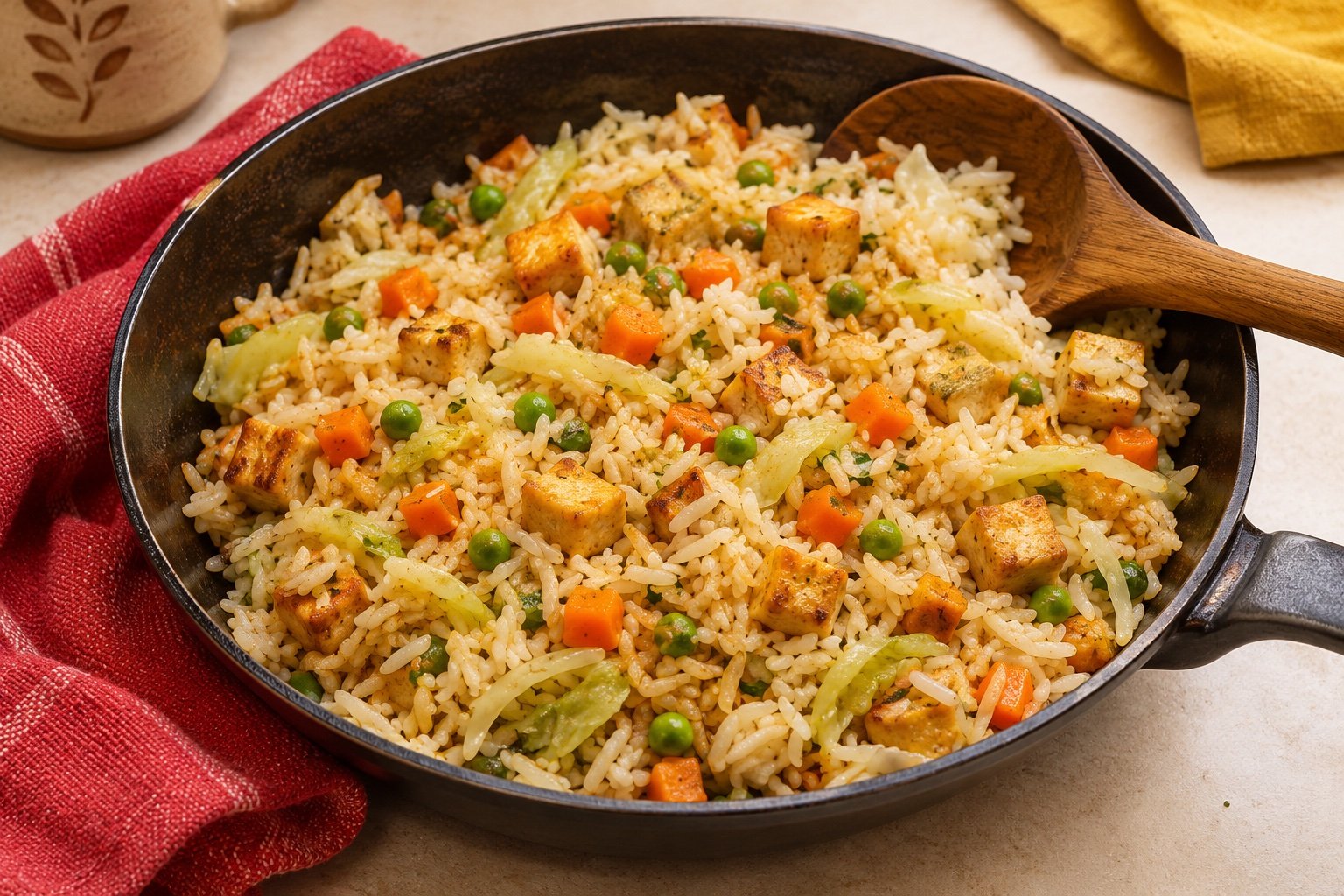
This guide uses rice you cooked at home, vegetables and firm tofu. The method is flexible, so choose ingredients that suit your household and follow their pack instructions. Make only the amount you plan to eat at this sitting.
Check when and how the rice was stored
Start with the date it was cooked. NSW Food Authority advises cooling and covering leftovers and putting them in the fridge or freezer within two hours. Smaller portions help food cool more quickly. Keep refrigerated leftovers below 5°C and use cooked rice within two days. Check its leftovers guidance for the full time and temperature advice.
Use rice only when you know how it was handled. If it sat on the bench overnight, or you cannot establish its storage history, discard it. Looking or smelling fine cannot establish that it is safe. HealthyWA explains that poorly cooled rice can allow bacteria to grow and produce toxin, and reheating cannot reliably make that rice safe.
Take extra care with takeaway rice because it may already have been reheated before it reached you. The home-cooked rice method here avoids that uncertainty. If you need food advice for pregnancy or reduced immunity, follow the relevant health guidance, which can be stricter than general leftovers advice.
Prepare a small batch before the pan goes on
For a modest panful, set out about two cups of safely stored cooked rice, two cups of chopped vegetables and a portion of firm tofu. These amounts are a starting point for adjusting the meal to your appetite and pan size. A little cooking oil, a small amount of soy sauce and a squeeze of lemon can finish it.
Choose vegetables that are easy to cut into small pieces. Try diced carrot, thinly sliced cabbage and frozen peas. Wash fresh produce before cutting, use clean equipment and keep it separate from raw meat. Follow the frozen vegetable pack for cooking directions. Our broccoli stalk guide has another option if you have a stalk to use.
Drain and cut the tofu into small cubes, following its storage and preparation instructions. Check the soy sauce and tofu labels for allergens and use alternatives suitable for the people eating. Keep the rice refrigerated while you do the chopping, then bring out only the portion going into the pan.
Cook the vegetables before adding the rice
Warm a little oil in a large frying pan over medium-high heat. Add the carrot and cook, stirring, until it begins to soften. Add cabbage and cook until it softens too. Stir in peas and cook them as their packet directs. Add the tofu and heat or cook it according to its instructions.
If the pan feels crowded, cook in smaller batches. A packed pan makes stirring awkward and can leave food heating unevenly. Transfer cooked vegetables to a clean plate while you finish another batch, then return everything to the pan for the final heating.
Add the rice and gently break up clumps with a spoon. Stir and turn the mixture so the rice heats throughout. A small splash of water can help loosen a dry mixture. Keep heating until the whole dish is steaming hot, checking the centre as well as the edges. Taste and adjust seasoning only once it is thoroughly heated.
Serve the portion you have reheated
Add soy sauce a little at a time, then lemon if you like it. Serve promptly. NSW Food Authority advises reheating rice only once. Cooking it in this pan counts as that reheat, so plan the batch around what you will eat now and discard any remaining reheated rice.
For next time, label freshly cooked rice with the cooking date and portion it into suitable shallow containers for prompt cooling and storage. That leaves you with a clearer choice at dinner: use a known, safely stored portion or cook a fresh batch. If you are planning a week of flexible meals, our three-dinner planning guide can help give each ingredient a place.