You save an interesting article, start a course, or buy a book with every intention of finishing it. Then the week fills up. By Friday, learning feels like one more thing you have failed to fit in.
A smaller approach can be more useful. Instead of waiting for a free evening, choose one question, give it a short piece of your day, and do something with the answer. The aim is not to become an expert in fifteen minutes. It is to make learning a repeatable part of ordinary life.
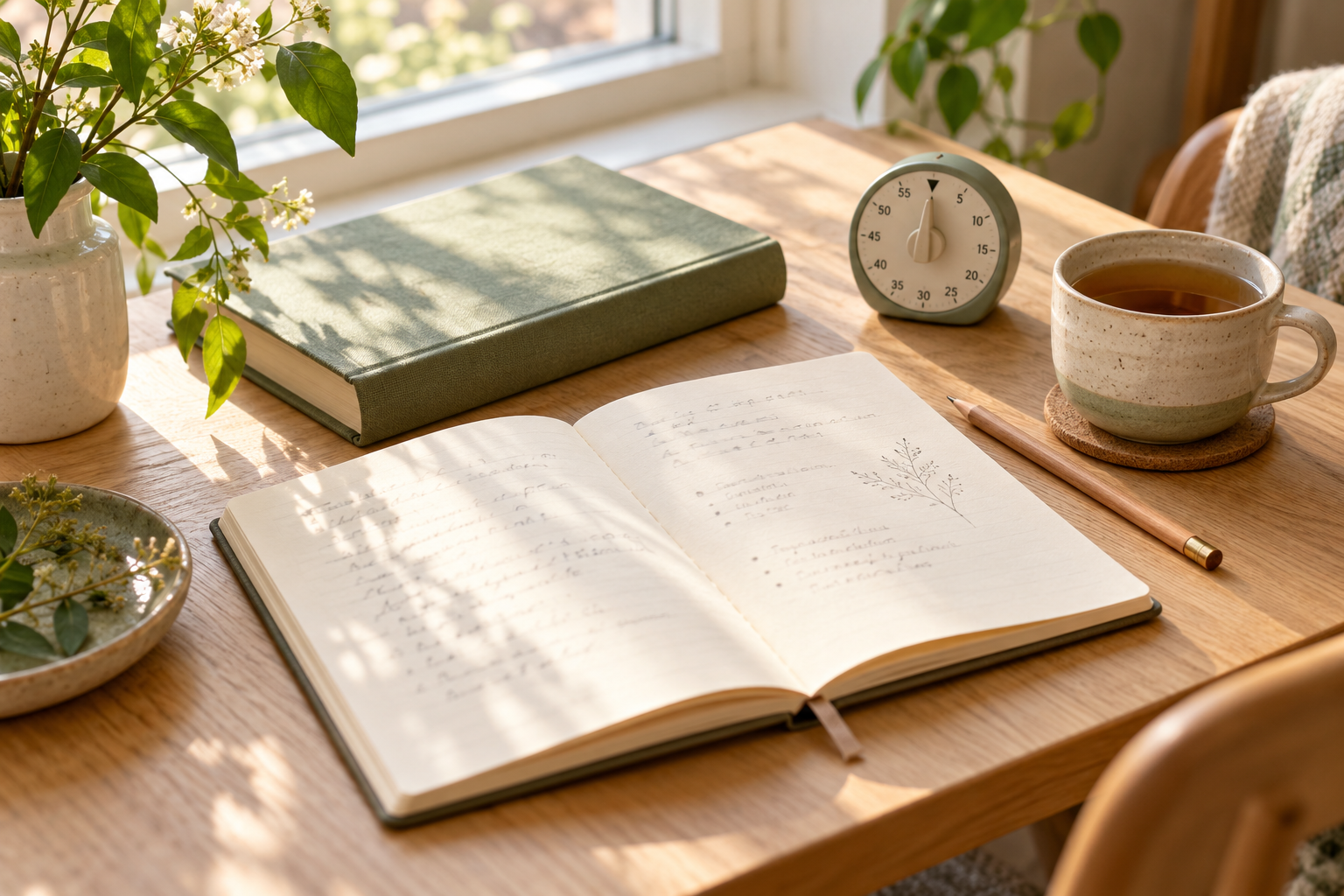
Start with a question you actually care about
“Learn more” is hard to act on. A clear question gives you somewhere to begin and a way to recognise progress. You might ask how to take sharper photos indoors, what makes a good short story, or how to grow herbs on a small balcony.
Choose something connected to a decision, interest, or problem you already have. Curiosity is easier to return to when the answer has a place in your life. You do not need to turn every interest into a career skill.
Write one sentence: “This week, I want to understand…” If the answer would require an entire textbook, make the question smaller.
Choose one main source for the week
It is easy to spend a whole learning session collecting resources. Five open tabs and a long video playlist can feel productive while leaving you unsure where to start.
Pick one suitable source: a book chapter, a practical tutorial, a museum guide, or an introductory course lesson. For factual subjects, look for a named author, relevant expertise, and clear sources. If a claim could affect your health or money, give the evidence extra attention.
Keep other interesting links in a short “later” list. You can explore them after you have worked through the source you chose.
Try a fifteen-minute learning loop
Fifteen minutes is a convenient starting point, not a special formula. Use ten minutes if that fits better, or stop after one useful paragraph. A short session can follow three steps:
- Explore for eight minutes. Read, watch, or practise with one question in mind.
- Recall for four minutes. Close the source and explain the main idea in your own words. Notice what is still unclear.
- Apply for three minutes. Try a small example, sketch a diagram, or write down how you could use the idea.
If you are learning photography, take two pictures with different settings. If you are reading about storytelling, rewrite one opening sentence. A small attempt gives you something concrete to examine next time.
Leave a note for your next session
Do not make tomorrow’s version of you remember where you stopped. End each session with three short notes:
- One thing I understood: a sentence in your own words.
- One thing I tried: the example or action you completed.
- One question to return to: the next small step.
These notes can live in a notebook or a single document. A complicated system is optional. The useful part is being able to open the page and know what comes next.
Attach learning to a realistic moment
Look for a moment that already exists in your day: after breakfast, during a quiet part of your lunch break, or before you turn on the television. Choose a time when you can safely give the subject your attention.
Prepare the material in advance. Leave the book beside your usual chair or bookmark the exact lesson. Removing a few setup decisions can make a short session easier to begin.
If your day is unpredictable, use a weekly target instead. Three short sessions across a week may suit you better than a daily rule.
Review the idea before adding more
At the end of the week, spend a few minutes looking at your notes. Can you explain the idea without reopening the source? Can you do the small task you set yourself? What would you like to understand better?
Use those questions to choose the next step. Sometimes you will repeat the same exercise. Sometimes you will need a different explanation. Sometimes you will decide that the topic is interesting but not a priority right now. All three are reasonable outcomes.
Make restarting part of the plan
A missed day does not need a catch-up marathon. Open your last note, choose the smallest next action, and continue. If you keep missing sessions, adjust the plan before deciding that you lack discipline.
Perhaps the time slot is inconvenient, the material is too advanced, or the question is no longer interesting. Change one of those things and try again.
Your first step today
Choose one question you would enjoy answering. Pick a single source, set aside a short session, and finish with a note about what you understood and what you will try next.
You do not need a packed learning schedule to keep growing. You need a useful question and a next step small enough to return to.
Keep exploring: Amazing benefits of reading, or browse the Personal growth collection.