Starting strength exercise at home can be as simple as making room beside a chair. Two movements give you something concrete to try: standing up from a chair and doing a push-up against a wall. The first session is a chance to find a setup and pace you can control. Give yourself time to notice how each movement feels before deciding what to do next.
Set up a space you can use again
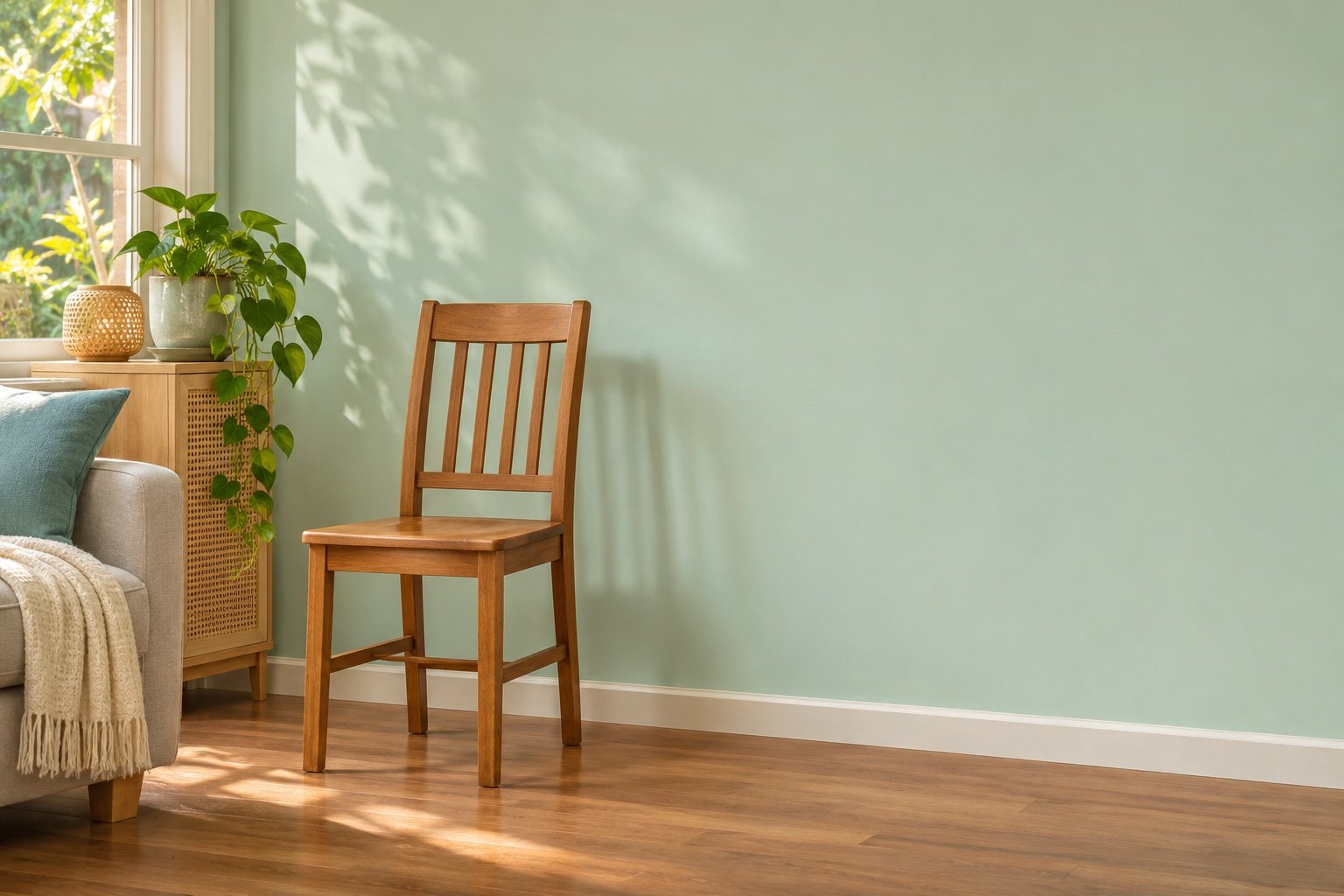
Choose a solid chair without wheels. It should stay put when you sit down or stand up. Sit on it first and check that both feet rest flat on the floor, with your knees bent roughly at a right angle. Use a clear, dry floor and move anything you could trip over, including a loose mat. For the wall push-up, use a clear section of solid wall with enough room to step back.
Start with some gentle movement that suits you, such as walking around the room. Healthdirect’s strength training guide recommends asking a doctor or exercise professional for advice before starting. If you have an injury, a health condition or difficulty with balance or getting out of a chair, ask what movements and setup would suit you.
Try a chair sit-to-stand
Sit towards the front of the chair with your feet about hip-width apart. Look ahead and lean forward a little. Push through your feet to stand up steadily. Once upright, lower yourself slowly until you are seated again. Give yourself a moment to reset before the next repetition.
Pay attention to the return to the seat. If you find yourself dropping onto it, try slowing down on the next attempt and stop if you still cannot control the movement. If the seat is too low for you to get up comfortably, a stable, slightly higher chair may suit you better, provided your feet can still rest flat. If you usually need help to stand, get guidance before practising on your own.
Try a wall push-up
Face the wall from about an arm’s length away. Place your palms flat at chest height with your fingers pointing up. Keep your body straight and bend your elbows slowly to bring yourself a little closer to the wall. Press through your hands to return to the starting position. Start with a comfortable bend and keep breathing normally.
If you can control a small bend, you have a range you can practise again. If your feet slip, reset your footing before another attempt. If the movement causes pain, stop. The NHS strength exercise guide has step-by-step photos for both movements if you want to check the starting positions.
Make the first session easy to repeat
Try a few slow repetitions of one movement and rest before deciding whether to try the other. Finish while you can still move steadily. Stop if you feel pain, dizziness or unwell and seek appropriate medical advice. If both movements felt manageable, keep the same setup the next time so you can compare how they feel. Add a repetition gradually when you can repeat the movement comfortably and with control.
For example, you might practise after your Saturday morning walk. You try three chair rises, rest, and then do three wall push-ups. You jot down which chair you used and how far you stood from the wall. On Tuesday you can set up the same way, or adjust the chair height if the first attempt felt awkward. Three is an example, so choose an amount you can manage comfortably. Leave enough time to rest so you can give each movement your full attention.
Build towards a fuller routine
The Australian movement guidelines for adults aged 18 to 64 recommend muscle-strengthening activity on at least two days a week. The full guidelines cover the main muscle groups, alongside other kinds of activity. The two movements here are an introduction. As you get more familiar with them, you can ask an exercise professional how to add other movements, including ones that work your back.
If you’re also finding time to move on busy days, our guide to fitting short walks into an ordinary day has ideas for choosing a route and a time that work for you.